Flesh & Bone Article on Tal Avitzur
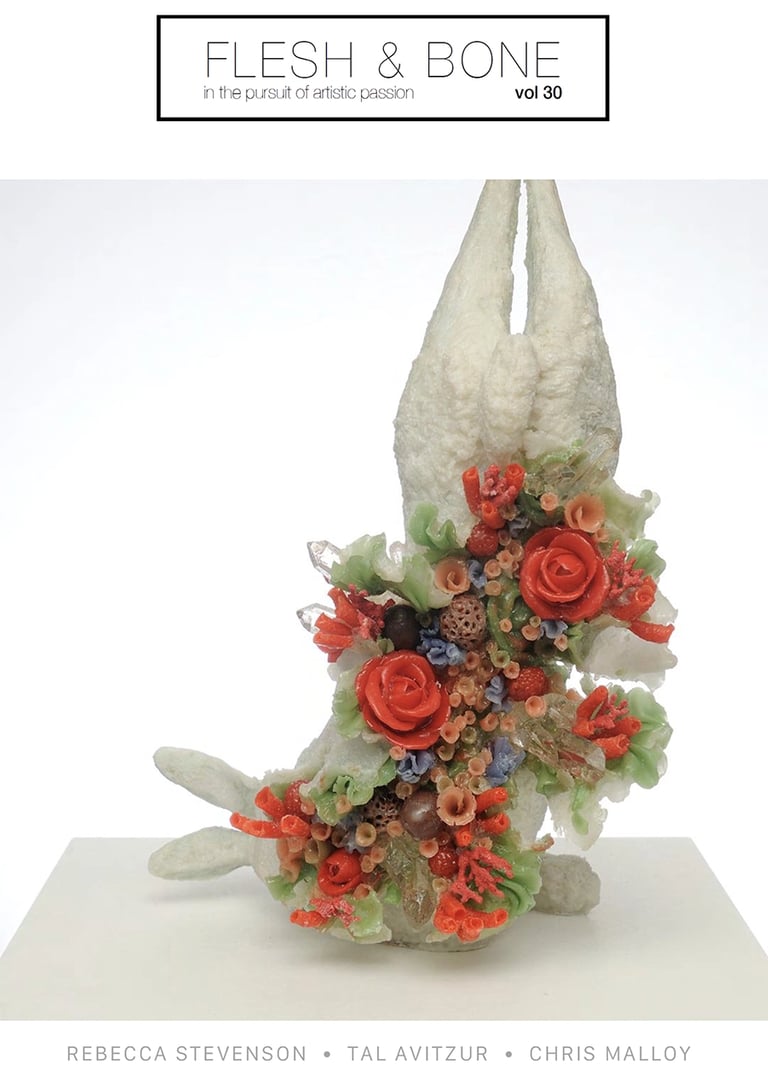
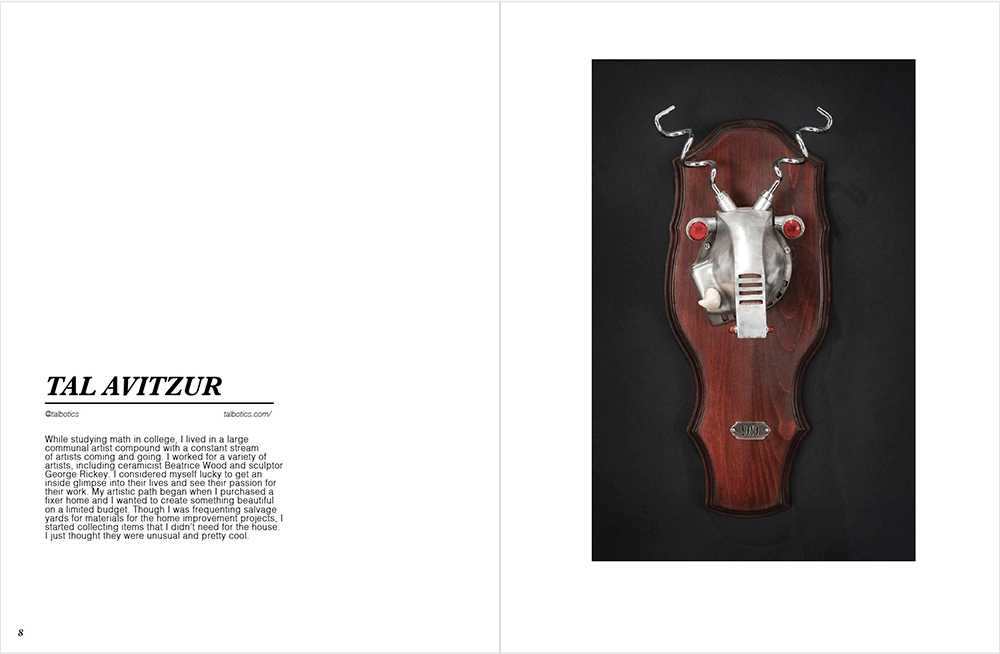
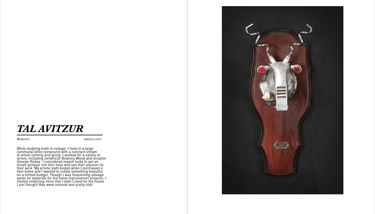
While studying math in college, I lived in a large communal artist compound with a constant stream of artists coming and going. I worked for a variety of artists, including ceramicist Beatrice Wood and sculptor George Rickey. I considered myself lucky to get an inside glimpse into their lives and see their passion for their work. My artistic path began when I purchased a fixer home and I wanted to create something beautiful on a limited budget. Though I was frequenting salvage yards for materials for the home improvement projects, I started collecting items that I didn’t need for the house. I just thought they were unusual and pretty cool.
When did you first start get involved with your creative ventures with metal and found objects? Did you have formal education to work with the different tools and devices?
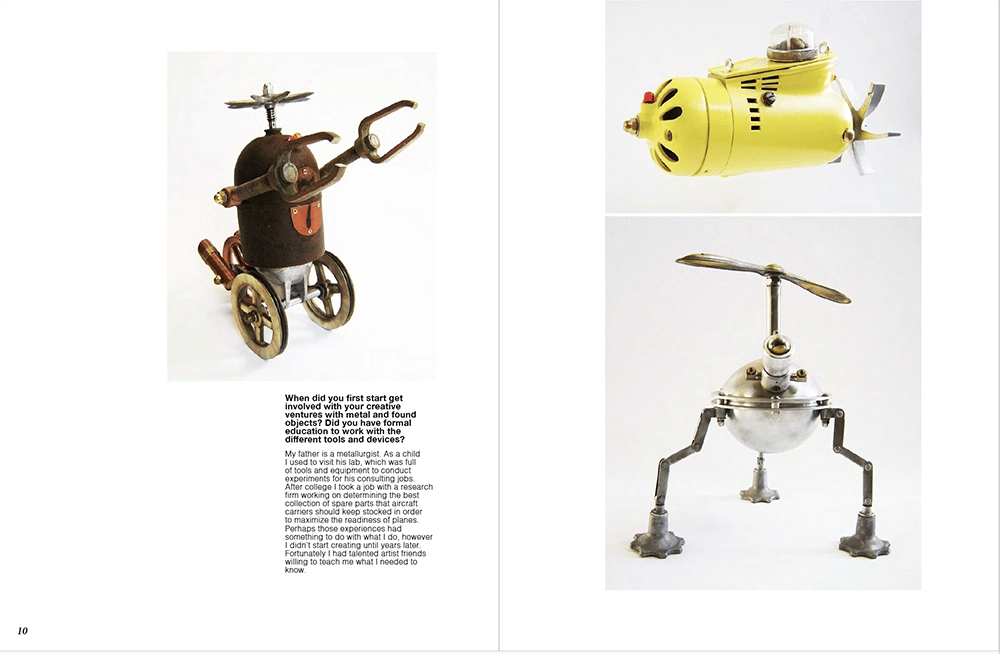
My father is a metallurgist. As a child I used to visit his lab, which was full of tools and equipment to conduct experiments for his consulting jobs. After college I took a job with a research firm working on determining the best collection of spare parts that aircraft carriers should keep stocked in order to maximize the readiness of planes. Perhaps those experiences had something to do with what I do, however I didn’t start creating until years later. Fortunately I had talented artist friends willing to teach me what I needed to know.
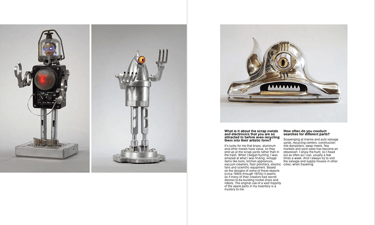
What is it about the scrap metals and electronics that you are so attracted to before even recycling them into their artistic form?
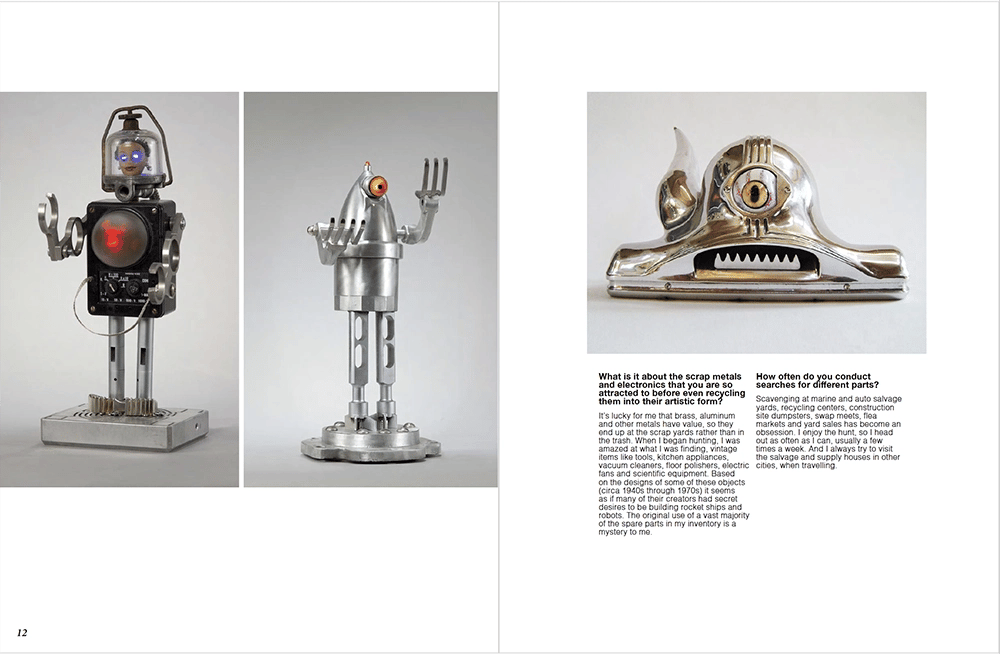
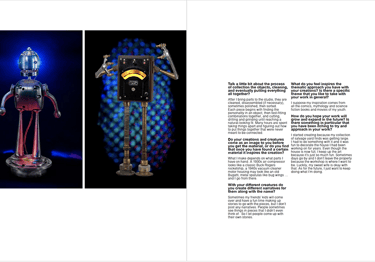
It’s lucky for me that brass, aluminum and other metals have value, so they end up at the scrap yards rather than in the trash. When I began hunting, I was amazed at what I was finding, vintage items like tools, kitchen appliances, vacuum cleaners, floor polishers, electric fans and scientific equipment. Based on the designs of some of these objects (circa 1940s through 1970s) it seems as if many of their creators had secret desires to be building rocket ships and robots. The original use of a vast majority of the spare parts in my inventory is a mystery to me.
How often do you conduct searches for different parts?
Scavenging at marine and auto salvage yards, recycling centers, construction site dumpsters, swap meets, flea markets and yard sales has become an obsession. I enjoy the hunt, so I head out as often as I can, usually a few times a week. And I always try to visit the salvage and supply houses in other cities, when travelling.
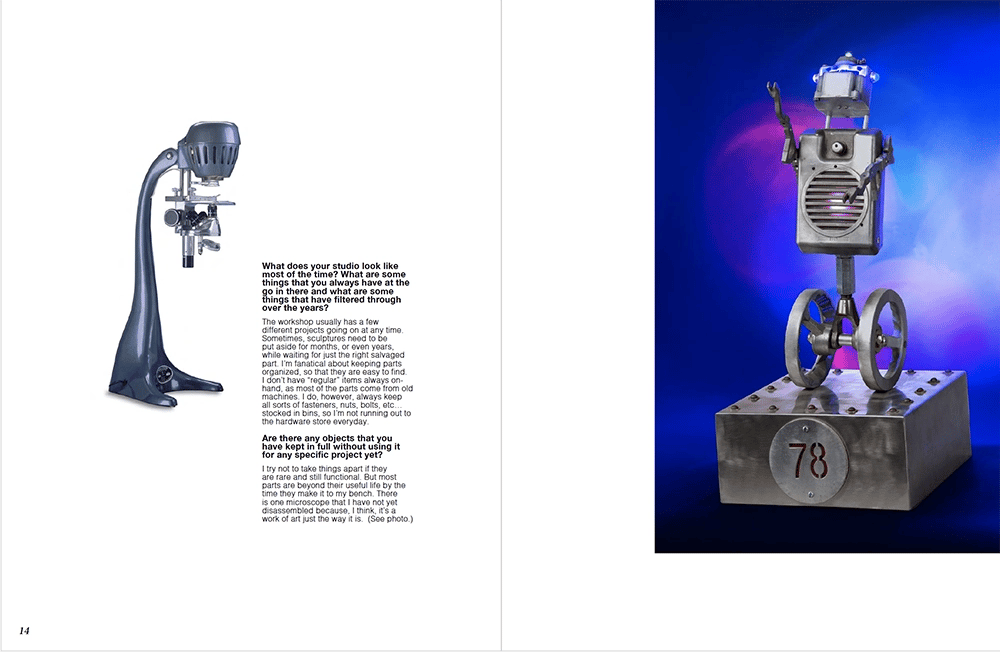
What does your studio look like most of the time? What are some things that you always have at the go in there and what are some things that have filtered through over the years?
The workshop usually has a few different projects going on at any time. Sometimes, sculptures need to be put aside for months, or even years, while waiting for just the right salvaged part. I’m fanatical about keeping parts organized, so that they are easy to find. I don’t have “regular” items always on-hand, as most of the parts come from old machines. I do, however, always keep all sorts of fasteners, nuts, bolts, etc… stocked in bins, so I’m not running out to the hardware store everyday.
Are there any objects that you have kept in full without using it for any specific project yet?
I try not to take things apart if they are rare and still functional. But most parts are beyond their useful life by the time they make it to my bench. There is one microscope that I have not yet disassembled because, I think, it’s a work of art just the way it is. (See photo.)
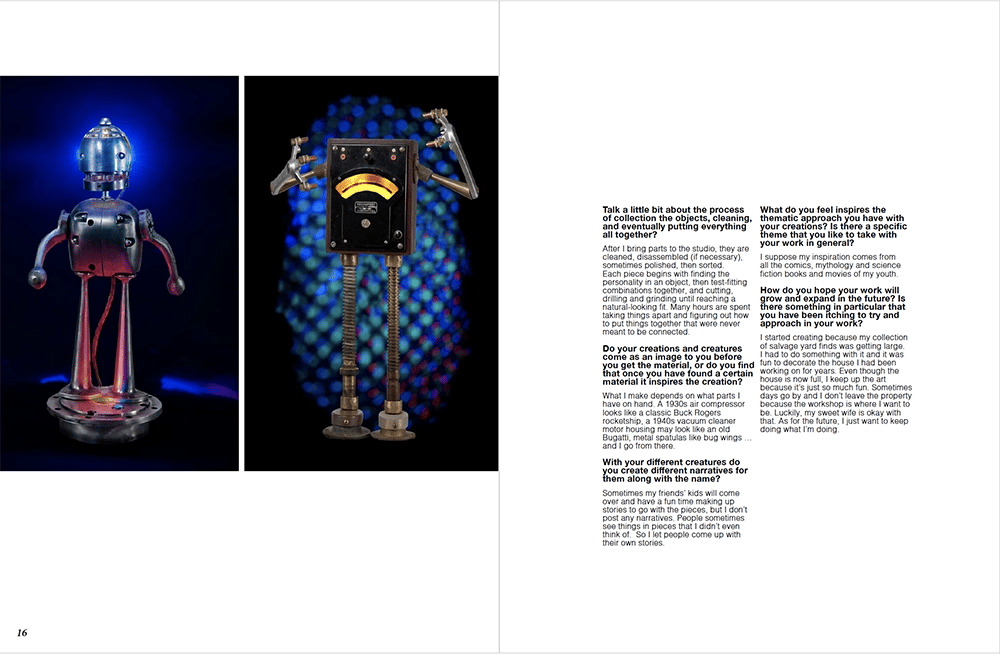
Talk a little bit about the process of collection the objects, cleaning, and eventually putting everything all together?
After I bring parts to the studio, they are cleaned, disassembled (if necessary), sometimes polished, then sorted. Each piece begins with finding the personality in an object, then test-fitting combinations together, and cutting, drilling and grinding until reaching a natural-looking fit. Many hours are spent taking things apart and figuring out how to put things together that were never meant to be connected.
Do your creations and creatures come as an image to you before you get the material, or do you find that once you have found a certain material it inspires the creation?
What I make depends on what parts I have on hand. A 1930s air compressor looks like a classic Buck Rogers rocketship, a 1940s vacuum cleaner motor housing may look like an old Bugatti, metal spatulas like bug wings … and I go from there.
With your different creatures do you create different narratives for them along with the name?
Sometimes my friends’ kids will come over and have a fun time making up stories to go with the pieces, but I don’t post any narratives. People sometimes see things in pieces that I didn’t even think of. So I let people come up with their own stories.
What do you feel inspires the thematic approach you have with your creations? Is there a specific theme that you like to take with your work in general?
I suppose my inspiration comes from all the comics, mythology and science fiction books and movies of my youth.
How do you hope your work will grow and expand in the future? Is there something in particular that you have been itching to try and approach in your work?
I started creating because my collection of salvage yard finds was getting large. I had to do something with it and it was fun to decorate the house I had been working on for years. Even though the house is now full, I keep up the art because it’s just so much fun. Sometimes days go by and I don’t leave the property because the workshop is where I want to be. Luckily, my sweet wife is okay with that. As for the future, I just want to keep doing what I’m doing.
Talbotics Sculpture Studio • Tal Avitzur
3945 Calle Cita, Santa Barbara, CA 93110
805-324-3991 • tal@talbotics.com
All images on this website are copyrighted by the artist, © Tal Avitzur, 2026.
If you use any image from this site for your blog or website please credit the artist and link back to this site.
If you would like to use any image or content from this site for commercial purposes, please email for licensing requests.